Commercial Production Roles: Who Does What?
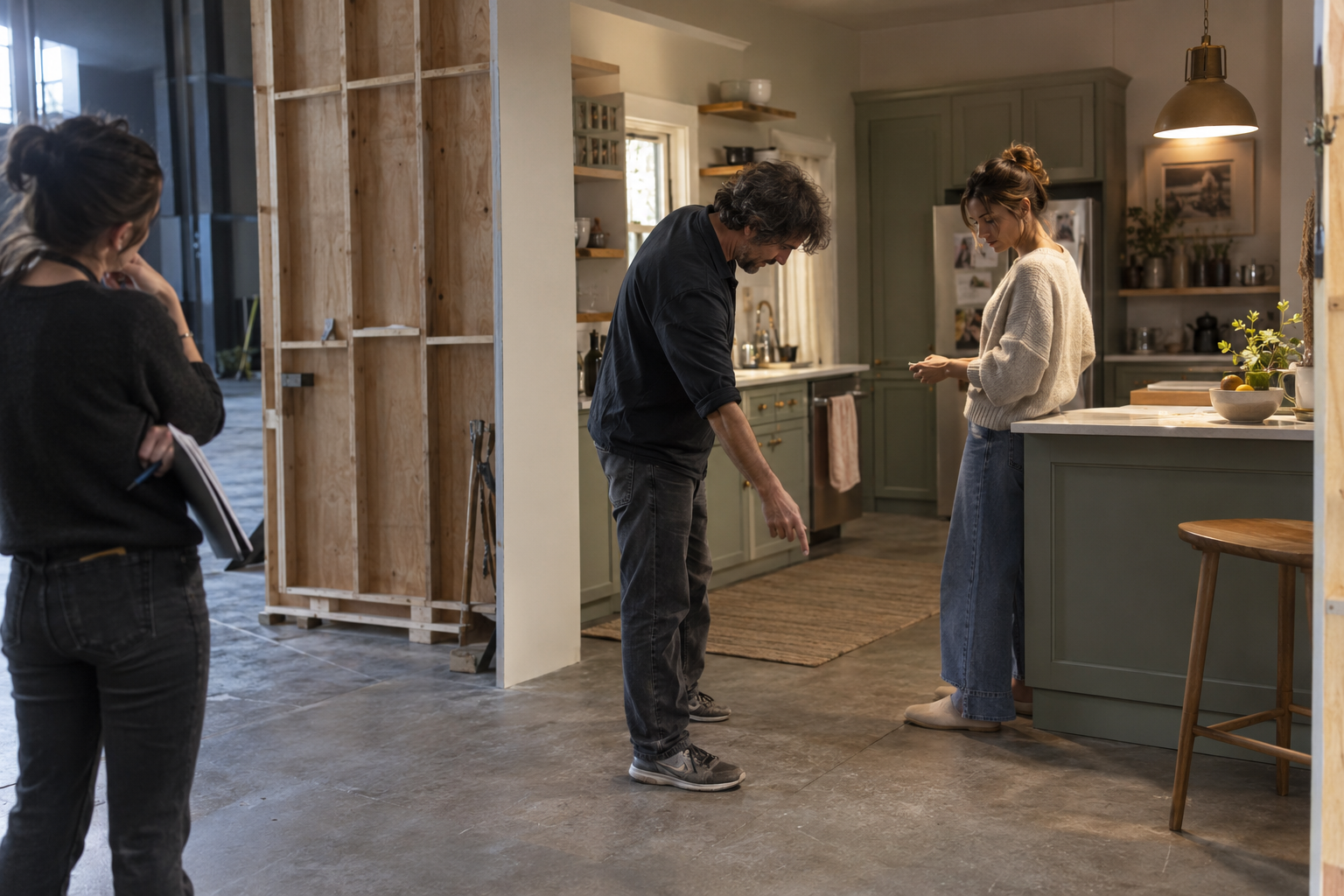
A commercial crew turns a creative idea into a finished piece of communication. The producer organizes the resources, the director shapes the execution, department heads lead their crafts, and post-production builds the final experience. The client and agency bring another essential responsibility: deciding whether the work delivers the campaign’s intent.
Those responsibilities overlap, but they are not interchangeable. A director can ask for a more intimate performance. A cinematographer can propose a closer camera position. The first assistant director can explain what that change means for the shooting day. They are addressing the same scene from different positions.
This guide maps the common roles on a commercial, from the brief to delivery. It is a reference for brands, agencies and production collaborators, rather than an inventory of every credit on a feature film. Crew size, production agreements and geography change how jobs are divided. The useful question is always: who owns this responsibility on this particular production?
The commercial team at a glance
Think of the team as several connected areas of responsibility. This is a working map, not a universal reporting chart.
-
The client and agency team establish the campaign objective and agreed approval process.
-
The director translates the idea into performance and screen language.
-
The producer, line producer and production manager make the scope achievable with the available resources.
-
The first assistant director coordinates the shooting plan and departments on the day.
-
The DP, gaffer, key grip and production sound mixer create and record the picture and location sound.
-
The production designer and craft departments shape sets, objects, clothing, hair and makeup.
-
The editor, colorist, sound and VFX teams build and finish the approved piece.
Each department has creative judgment. The distinction is the part of the production for which it is accountable. A good art department does more than supply furniture; a good sound department does more than record a voice. Both influence what the audience believes.
Creative leadership and campaign approval
Client and agency team
For a commercial, the production begins with a business and creative objective. The brand team and, where involved, the agency establish what the campaign needs to communicate. Agency creatives may develop the concept, script or visual direction; an agency producer may coordinate the agency’s side of the production.
Titles and approval arrangements vary. A useful project agreement names who can approve the treatment, cast, product presentation, edit and final versions. That avoids treating every comment as an instruction of equal authority. The client’s approval responsibility and the director’s responsibility for executing a scene need a clear connection.
Producer and executive producer
The producer connects the creative ambition to the practical means of delivering it: people, time, money and the production plan. ScreenSkills’ producer profile describes a role spanning creative and practical leadership. In a commercial context, the producer also needs a clear understanding of the agreed campaign scope and approvals.
Executive producer is a variable title. In a production company it may indicate oversight of the business relationship, the production or the company’s resources. It does not reliably tell a visiting client who is managing the set that morning. Confirm the actual remit rather than reading a full job description into the credit.
Director
The director leads the creative realization of the piece: performance, staging, tone and the relationship between shots. The director works with the DP and craft departments to make those choices visible, then works with editorial to develop the finished sequence. ScreenSkills’ director profile follows that responsibility across preparation, filming and post.
On a commercial, the creative choices also have to serve the brief. A beautiful scene that obscures the product or changes the intended message creates a different problem from a technically unsuccessful take.
Casting director and performers
The casting director interprets the roles, finds suitable performers, organizes auditions and presents options for consideration. Casting is a creative search, not simply a list of people who are available. The final selection depends on the project’s agreed decision process. ScreenSkills explains the casting role and its collaboration with producers and directors.
Performers bring the scene to life through behavior, voice and movement. The director shapes that performance for the camera. Representation and casting are different functions: a talent agent represents a performer’s interests, while a casting director works to fill the production’s roles.
Production management and the shoot day
Line producer and production manager
The line producer translates the creative scope into a resourced production: crew, facilities, equipment and expenditure. The production manager manages the practical organization required to execute it. Budget responsibility can overlap; the division depends on the job. A small commercial may combine responsibilities that a larger production assigns to several people.
ScreenSkills’ line-producer profile and production-manager checklist describe this relationship. The useful distinction is between oversight of the production’s resources and management of its operating details, with the actual authority agreed in advance.
Production coordinator and production assistants
The production coordinator keeps the production office and its information moving: schedules, crew details, travel arrangements, revisions and other logistics. ScreenSkills’ coordinator profile shows how much of the role is preparation and communication.
Production assistants, often called PAs, support assigned tasks in the office or on set. Their duties should be specific to the production. Being the available person nearby does not make a PA the owner of every unresolved technical task.
First assistant director and second assistant director
The first assistant director, or 1st AD, coordinates the shooting day. The role connects the schedule, department readiness and movement of people so the director can concentrate on the work being filmed. An AD is not an assistant learning to direct by doing the director’s creative job. ScreenSkills’ assistant-director profile explains the planning and coordination involved.
A 2nd AD, when the crew includes one, supports that organization, often with cast logistics, call-sheet preparation and communication beyond the immediate set. The division of duties changes with the size of the AD team.
Location manager and script supervisor
The location manager researches and coordinates real locations, including their practical suitability, access and relationship with owners. A visually perfect room may present difficult sound, parking or operating constraints. ScreenSkills’ location-manager profile describes both finding a location and managing its use.
The script supervisor follows what is actually filmed: continuity, dialogue, action, coverage and take information. Their records help the director and editor understand how material can fit together. They are not the scriptwriter. ScreenSkills’ scripted-production profile explains this link between set and edit. On a commercial, that attention can matter as much to a repeated product action as to a dialogue scene.
Camera, lighting and recorded sound
Director of photography and camera operator
The director of photography, or DP, develops the photographic approach with the director: lighting, framing, movement and the camera requirements. The camera operator executes framing and movement during the shot. A DP may also operate, particularly on a smaller crew. ScreenSkills’ DP profile and camera-team descriptions distinguish these functions.
Camera assistants, DIT and media handling
The 1st assistant camera, or 1st AC, manages focus and helps prepare the camera and lenses. The 2nd AC supports equipment preparation, slating and camera records. A slate identifies a take; consistent records make it easier to connect the recorded material with production notes.
The digital imaging technician, or DIT, supports the DP’s digital-image workflow, including image assessment and quality checks. ScreenSkills’ DIT profile describes that technical and creative connection. The data wrangler handles footage transfer and tracking. These functions can intersect, but “DIT” should not be assumed to mean only copying files.
For a commercial, prep should establish who is responsible for recorded media, review material and the handoff to post. A confident-looking monitor image does not answer all three questions.
Gaffer, key grip and their crews
The gaffer leads the lighting department, translating the DP’s lighting intention into an executable setup. ScreenSkills’ gaffer profile describes the planning as well as the work during filming.
In US production, the key grip leads grip work involving camera support and movement, rigging, and non-electrical light control such as diffusion and flags. Grip and electrical responsibilities are distinct. The dolly grip specializes in the dolly’s positioning and movement. IATSE Local 490’s craft descriptions provide US context; UK grip descriptions place particular emphasis on camera support. Local practice and agreements govern the actual division.
Lighting technicians and grips execute their departments’ setups. Chief assistants, sometimes credited as best boys, help manage departmental equipment and logistics. These are department roles, not substitutes for the DP.
Production sound mixer and boom operator
The production sound mixer leads the recording of sound during filming, particularly dialogue. The role includes anticipating location problems and assessing whether the recorded sound is usable. ScreenSkills’ sound-mixer profile describes that collaboration with the director and other departments.
The boom operator positions and follows the microphone for the action while coordinating with the mixer and camera team. Production sound gives post the recorded ingredients; it does not create the entire finished soundtrack on set.

The people who create the world on screen
Production designer, art director and set decoration
The production designer develops the visual world with the director and other departments: spaces, surfaces, colors and objects that support the idea. The art director helps translate that design into coordinated work, drawings, builds and departmental execution. ScreenSkills’ production-designer profile describes the overall design responsibility.
The set decorator selects and arranges the environment’s furnishings and decorative detail, while set dressers help realize and maintain it. ScreenSkills’ set-decorator profile also notes the use of “stylist” in commercials. Terminology varies, so a title alone should not decide where a task belongs.
Props, wardrobe, hair and makeup
The prop master manages the production’s props: sourcing or making them, preparing them and keeping them available for the required action. ScreenSkills’ prop-master profile explains the coordination with design and set decoration. On a product commercial, prep should explicitly allocate responsibility for the featured product and its duplicates rather than assume it belongs to one department.
Costume designers and wardrobe stylists develop and source what people wear. Hair and makeup departments create and maintain the performers’ appearance. Both collaborate with the director and visual departments, and both need continuity between takes. ScreenSkills describes costume design and hair and makeup, noting that hair and makeup can be separate departments.
These choices carry creative meaning. The texture of a jacket, the wear on a table or the arrangement of a room can suggest character before anyone speaks.
Post-production and final delivery
Editor and assistant editor
The editor shapes the selected material into a coherent piece through structure, performance, rhythm and the relationships between images and sound. ScreenSkills’ editor profile describes that collaboration with the director.
The assistant editor supports the organization and technical preparation of the material so editorial can work efficiently. That can include ingest, syncing, project preparation and exports; the exact remit depends on the post team. An assistant editor and an editor own different parts of the workflow even when one person performs both.
Colorist, VFX artists and motion designers
The colorist balances and develops the image’s color and tonal character, working toward a coherent look across shots. ScreenSkills’ colorist profile describes that relationship with the director and DP.
VFX artists handle the visual-effects work required by the project. A compositor combines visual elements into a finished shot, as described in ScreenSkills’ compositor profile. Motion designers create animated graphic elements, including type and brand graphics. These may share a finishing pipeline while requiring different creative skills.
Sound editorial and final mix
Sound editors and sound designers prepare and develop the soundtrack: dialogue, atmosphere, effects and other required elements. A supervising sound editor may coordinate that work on a larger production. The re-recording mixer, also called a dubbing mixer, blends the elements into the final mix. ScreenSkills describes sound editorial and dubbing mixing as related but distinct responsibilities.
Post producer, supervisor and delivery
The post producer or post-production supervisor coordinates the finishing resources, schedule, reviews and delivery commitments. The remit depends on the company and project. ScreenSkills’ supervisor profile explains the resource and completion responsibility.
Delivery also needs an owner: someone must confirm that the right approved versions reach the right destination and meet the agreed specifications. Larger teams may use a dedicated deliverables producer; smaller teams allocate that work within post. The final export is a production responsibility, not simply the last button pressed in an editing application.
How responsibilities connect
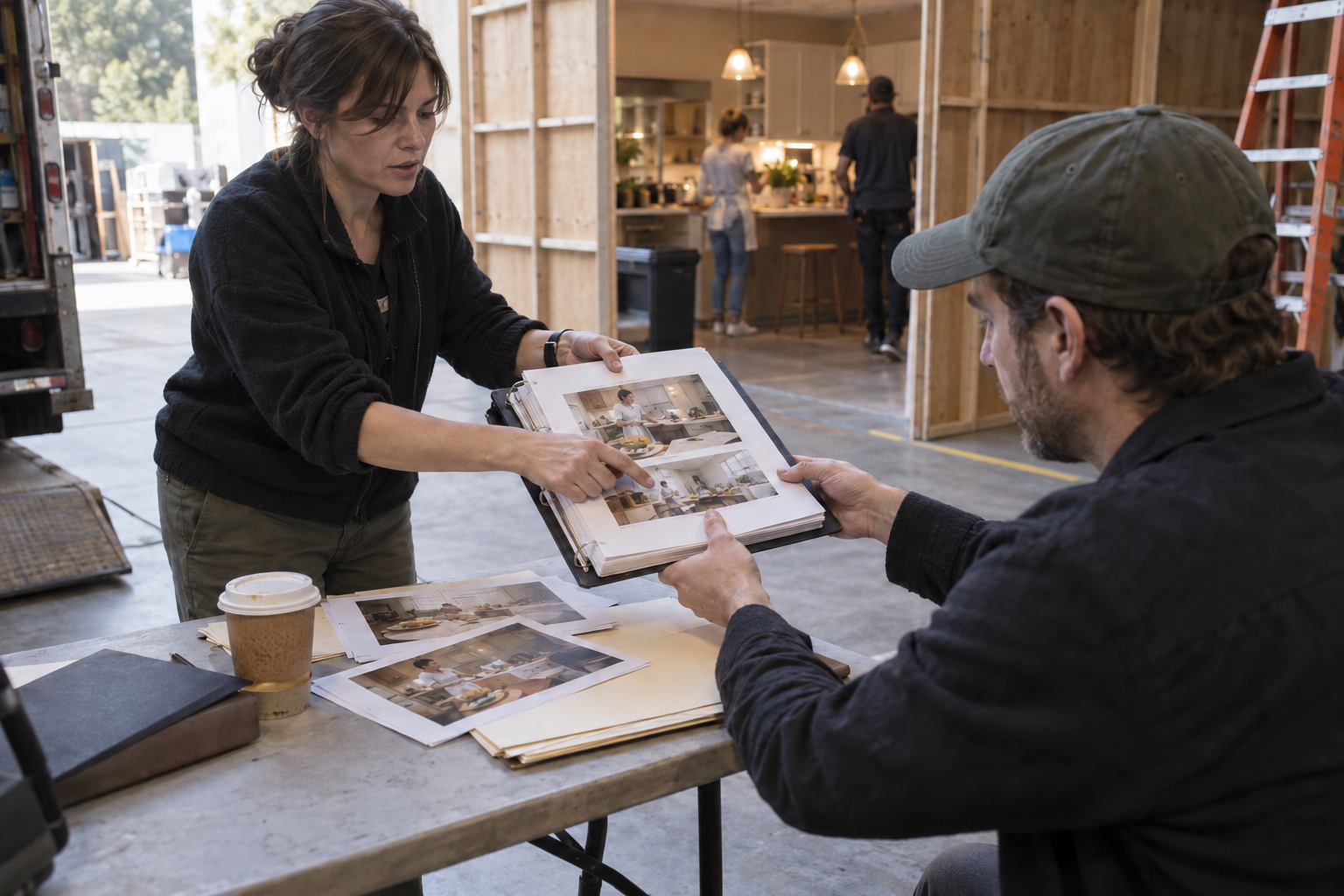
Consider a hypothetical kitchen commercial in which a performer sets down a mug, delivers a line and reveals a product. The director owns the performance and staging. The DP develops how the moment is photographed. Art and props prepare the environment and action objects; wardrobe, hair and makeup establish the performer’s appearance.
The AD coordinates readiness and the shooting plan. Sound assesses the line’s recording. The script supervisor follows details that need to match between angles, such as which hand lifts the mug and when the product appears. Camera and media records allow the material to be identified. Editorial then constructs the moment from the available coverage.
If the client requests a different product position, that note may affect framing, dressing, performance and continuity at once. Routing it through the agreed creative and production leads allows the team to understand the whole change before individual departments act on fragments of it.
That is why handoffs deserve attention during prep. Editorial needs to know what has been captured and where it lives. Finishing needs a clear version to work from. The approval team needs to know which decisions are being requested at each review. A change late in the edit should be communicated to the sound, color and effects teams it affects.
Our Wex Benefits campaign offers a real, compact example of departments serving one idea: an office environment was built on the Las Vegas soundstage, with production and post coordinated through delivery. The craft is visible on screen; the organization makes that craft usable.
What changes on a smaller crew
A smaller production can combine roles. A DP may operate the camera. A producer may also manage logistics. An editor may handle elements of finishing. Combining jobs changes the staffing, but the responsibilities still need attention.
A useful prep conversation covers five things: who can approve creative changes; who coordinates the day; who owns each technical and craft task; who handles media and records; and who confirms the finished versions. These are practical planning questions, not a recommended minimum crew or a substitute for applicable production agreements.
Some projects also need specialists beyond this guide’s core map: stunt coordination, intimacy coordination, animal handling, aerial work, food styling, motion control or particular effects. Their involvement follows the actual brief and production requirements. “Small crew” is not a reason to assign specialist work casually.
The deeper value of knowing the roles is knowing how to work with them. A clear responsibility map gives a production room to be creative without making every decision a guessing game. Our article on crew teamwork explores that collaborative side. For brands planning a commercial, In Color Studios’ video-production work shows where those connected disciplines can lead.
*Images are AI-generated illustrations of fictional production scenarios.Related Production Articles