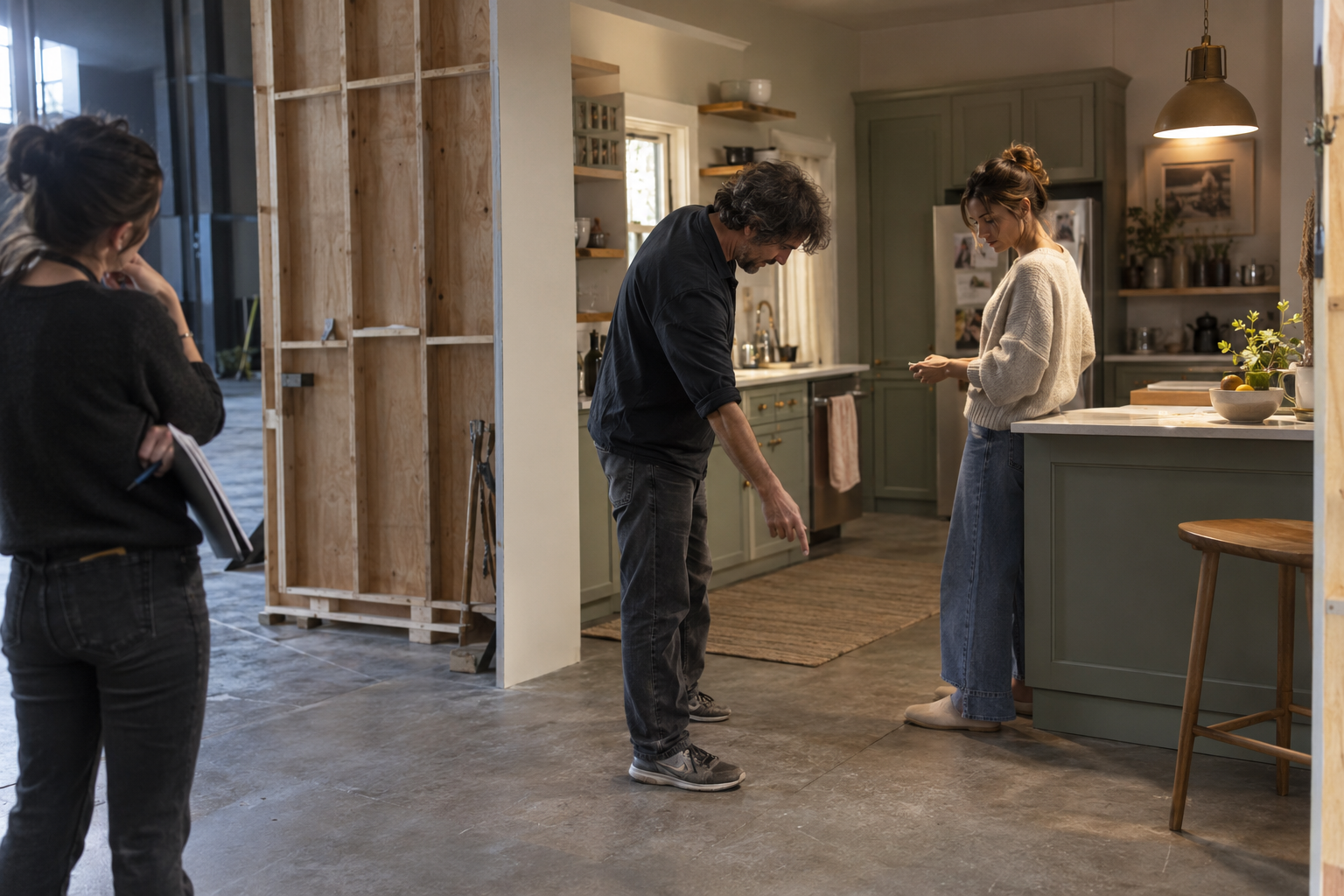
A commercial director turns an advertising idea into a specific screen experience. The work connects the intended message with performance, staging, images and timing, then keeps those choices coherent as departments contribute. A director may propose an approach before the job is awarded, prepare the action with the production team, direct the shoot and contribute to the edit. The exact engagement and approval process should be clear from the start.
For a brand or agency, understanding that role makes collaboration more useful. A request for a warmer performance, a clearer product moment or a shorter opening becomes a creative decision someone can develop. The director gives those decisions a form that the audience can see and hear.
This guide focuses on live-action advertising, rather than the business executive sometimes called a commercial director. It follows a fictional lunch-container campaign to explain responsibilities, collaboration and the points where creative leadership meets client approval. The example is illustrative, not an account of an In Color Studios project.
The director defines how the idea will play
An advertising concept can establish a message without settling its performance or visual language. The director develops an interpretation: what happens, how the audience encounters it, and what makes the moment feel convincing. This involves choices about behavior, perspective and rhythm as well as appearance.
ScreenSkills’ director profile describes the film and television craft in terms of visualizing a script, working with actors and collaborating with department heads. Those craft relationships are useful context for commercials. Advertising also brings a specific commissioning brief, product requirements and approval structure; a film-role description does not establish every commercial responsibility.
Imagine the fictional campaign asks for a short spot about preparing lunch before leaving home. The product needs to be recognizable, and the tone should feel relaxed. The director could build the action around a person closing the container while continuing a conversation, with a small pause before picking it up. That gives the brief a behavior and a moment of attention.
Another interpretation could make the product reveal more deliberate, with separate detail shots and a different pace. Neither approach follows automatically from the words “relaxed morning.” The director’s contribution is to make an approach specific enough that the agency, client and crew can discuss the same film.
A treatment makes the approach discussable
A director’s treatment explains the proposed execution. It can combine writing and visual references to communicate tone, performance, setting, camera approach and the intended relationship between shots. Its useful purpose is to show how this director understands this assignment.
The starting point should be the actual commercial production brief. Which message is essential? Which product details must be visible? What durations and frame shapes are required? A treatment can offer an inventive answer while making its assumptions visible. Attractive references alone leave the production team guessing about what must actually happen.
For the lunch-container spot, a useful proposal might explain that the performer stays engaged with another person, the closing action remains readable, and the product gets a distinct moment before the departure. References could help communicate the ordinary morning light or the performance tone. They would not establish that every pictured location, prop or shot is included in the job.
Treatment approval should therefore identify the accepted direction and unresolved choices. A brand may like the tone while still needing to approve the product variant or a proposed line. Record those differences before the document becomes the basis for casting, design and coverage. A full treatment-writing process is its own subject; the important point here is what the director needs that document to communicate.
Preparation connects creative choices to departments
During preparation, the director works with collaborators to make the interpretation achievable. Casting tests whether a performer can support the intended behavior. Location and design decisions establish the physical world of the action. Camera planning considers how the audience will understand the performance and product.
The director should describe what a choice needs to accomplish while leaving room for specialist judgment. In the fictional kitchen, the story might require a clear view of the performer’s hands followed by a glance toward the doorway. The cinematographer can explore framing and light around that intention. The production designer can address the counter, background and practical objects. Their proposals may improve the original idea.
The commercial producer connects creative decisions with resources, scope and approvals. If the director proposes moving the action between two rooms, the producer can establish what that means for preparation and the day’s work. Discussing those consequences gives the team an informed choice before committing to it.
Useful prep ends with decisions people can act on. For the example, that could mean an agreed performance approach, a selected product sample, the action’s starting and finishing positions, and a coverage plan for the required versions. Open questions still need named owners. A director’s creative intention becomes dependable when departments understand what matters and where they can develop the details.

Performance direction gives the scene an action
On set, a director helps the performer do something specific within the scene. Broad mood words can start a conversation, but they often need a playable action. A note should give the performer something useful to attempt and leave room to respond.
In the fictional commercial, “be more natural” could mean several incompatible things. The director might instead ask the performer to keep listening to their scene partner while closing the container, then glance toward the door only after hearing a particular cue. The resulting behavior can be watched, discussed and adjusted. It also makes clear which part of the performance the note concerns.
Blocking describes the arrangement and movement of performers within the shot. For this scene, the director could rehearse where the container starts, when the performer turns and how the pickup connects to leaving. Rehearsal lets the team discover whether the action feels credible before treating every position as fixed.
Product visibility remains part of the creative problem. If the hand obscures the container throughout the useful moment, the director can work with the performer and camera team to adjust the action. The aim is a readable product moment that belongs to the performance. The client’s product requirements need an agreed review route; an improvised gesture should not become an unsupported demonstration of product capability.
Director, DP, producer and AD solve different parts
The director leads the creative interpretation. The director of photography develops and executes the photographic approach in collaboration with that interpretation. A producer manages the production assignment and its resources. The assistant director organizes the floor and progression of the shoot. On smaller jobs, responsibilities may be combined; on larger ones, more people divide them. Clarify the actual staffing rather than treating these descriptions as a universal reporting chart.
Consider a proposed tighter shot of the container closing. The director asks what the detail contributes to the scene. The DP considers how to photograph it. The AD considers how the setup fits into the working order. The producer assesses a change to the agreed scope or resources when one is involved. Several people participate, but they are answering different questions.
That distinction also helps when something needs to change. A client request for a different product color could affect styling, continuity and coverage. It needs to reach the director as a creative question and the producer as a scope question, then the relevant departments as an agreed instruction. Asking one person to solve all of those concerns without consultation creates avoidable ambiguity.
The broader commercial production roles guide maps the departments around this collaboration. The director’s particular responsibility is to keep their contributions serving a coherent experience for the viewer.
Client feedback needs a clear route to the work
Commercial production includes people responsible for the brand and its message. The director needs their requirements and observations, while performers and crew need a clear creative instruction. Establish who consolidates agency and client feedback, who approves product presentation, and how a request reaches the director.
The DGA’s Code of Preferred Practices recommends that on-set notes to performers and crew come through the director. The DGA explicitly describes the code as voluntary guidance that may not apply in every instance, separate from its commercial agreement. It is a useful communication principle, rather than a substitute for the project’s actual terms or an assertion of universal contractual rights.
For the fictional campaign, a client might observe that the container is difficult to recognize. That is a clear problem to bring to the director. A small change in hand position, framing or the duration of the action could address it. Several people independently coaching the performer to “sell it more” would leave the actual problem less defined.
Separate an observation from a proposed solution, then assess the solution with the people it affects. If a new request changes the approved action or adds a version, the producer should help establish its consequences and approval. Creative responsiveness works best when everyone understands what has been decided.
The director considers what the edit will need
Directing the shoot includes thinking about how the material can connect. A shot can look convincing by itself and still leave a gap in the sequence. The director and editor benefit from a shared understanding of the intended rhythm, important actions and available alternatives.
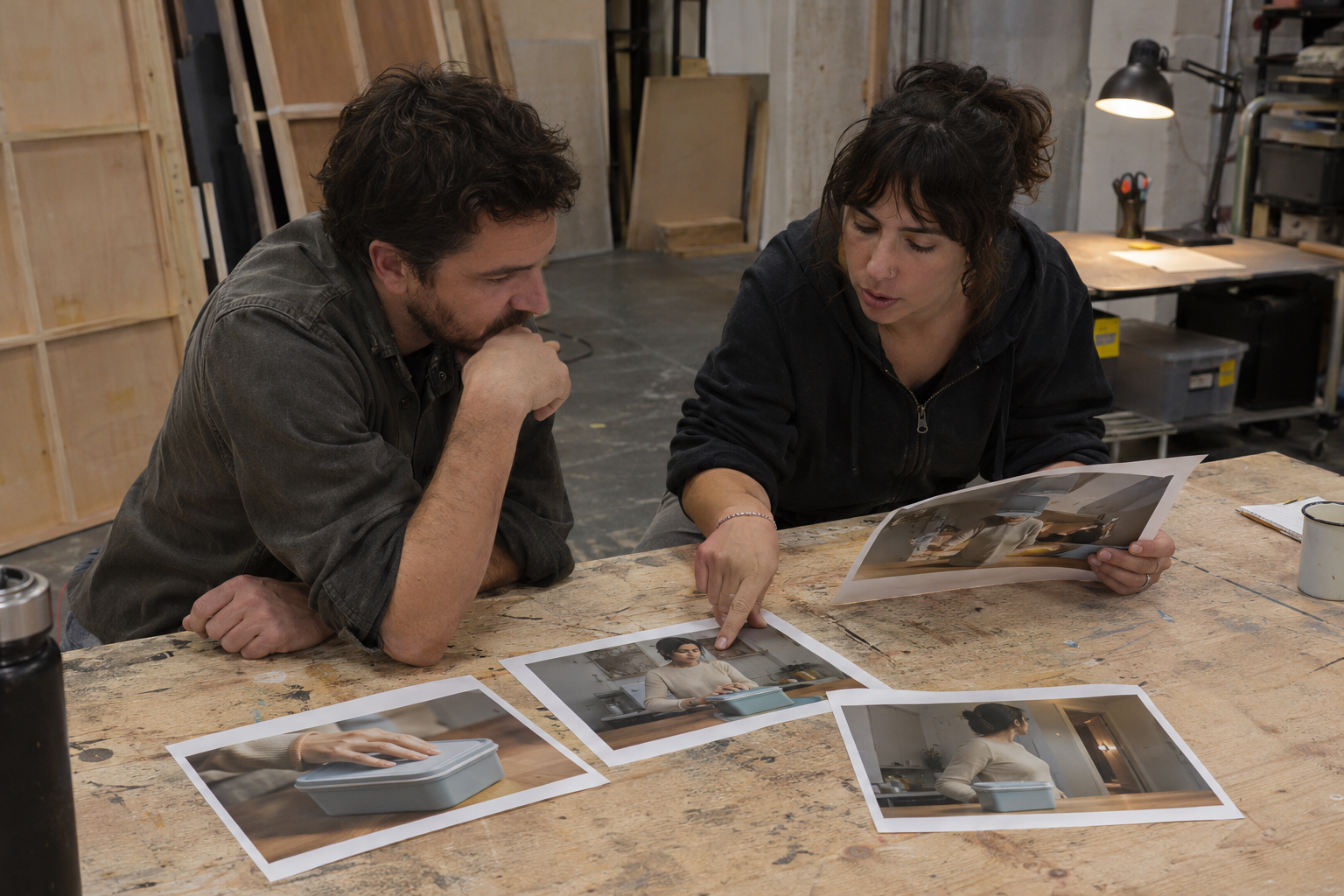
In the lunch-container example, a wide action might establish the conversation while a closer view makes the closing moment readable. The director needs to consider how those pieces meet: the performer’s hand, the position of the container and the moment of the glance. Additional coverage is useful when it provides a meaningful editorial option. More shots without a purpose can leave the central sequence unresolved.
Different versions also need creative attention. A short edit might open with the closing action rather than the conversation. A vertical composition might need another relationship between face and product. These are questions to resolve in preparation and capture, rather than assuming every intended version can be extracted from one image.
The director’s post-production involvement should be agreed. It may include reviewing selects, working with the editor, presenting an initial interpretation or commenting on performance and timing. Do not assume the same arrangement for every commission, or that the director has final approval of the brand’s released version.
For the example, the director could explain why a slightly held pause makes the departure feel unhurried. The editor can test that timing against the available material and running time. Agency and client review then address the work through the agreed approval process. This keeps creative intent useful after the shoot without confusing it with sole ownership of the finished campaign.
Agree on the director’s contribution before the shoot
When commissioning a director, discuss the work that needs creative leadership and the stages included. Who supplies the concept and script? What does the director develop? Which casting, location and design decisions need review? Who consolidates feedback on set? What post-production participation is expected, and who approves the final versions?
These questions matter more than a title alone. A director joining an agency’s established concept has a different starting point from one helping a brand develop the idea. A combined director/DP still needs the resources and collaborators required for both responsibilities. A brief engagement should have a clear handoff.
For brands considering video production services, the director’s value becomes easier to understand through those concrete decisions. The message acquires an action, the action acquires a point of view, and the captured material gives the edit a way to communicate. Clear responsibilities let that creative contribution survive the journey to the finished commercial.
Images are AI-generated illustrations of fictional production scenarios.Related Production Articles