A Las Vegas filming location can look right before it is ready to work. The camera finds a convincing lobby, a useful stretch of window light or a doorway that gives a commercial its opening. Outside that composition, the production still needs somewhere to prepare, wait, move material and reset.
Those spaces rarely appear in the finished spot. They can nevertheless influence the images a crew is able to make. A narrow choice of camera positions, a preparation area that competes with the action, or an arrival route that interrupts the room can change the creative possibilities long before the edit.
That gives location selection a second visual dimension. The subject is the room inside the frame. The production depends on the space around it.
A scout photograph shows one moment
A location photograph can establish character quickly. It can show the depth of a room, its surfaces and the way an entrance connects to the background. It is less likely to explain what happens when the performer returns to the starting mark or when the next prop needs to be ready.
Film Nevada's location-directory guidance asks property listings to describe available filming spaces and practical details such as parking, access, power and restrictions. That is a useful reminder of how much of a location exists beyond its most attractive photograph.
For commercial work, the missing information has creative consequences. A doorway may frame an arrival beautifully but also be the only route through which people and material enter the room. An elegant seating area may be useful in the background while leaving little room for the crew working outside the composition.
The photograph has not misled anyone. It has answered an image question. A production conversation has to connect that answer to the way the place will be used.
The action occupies more than its screen time
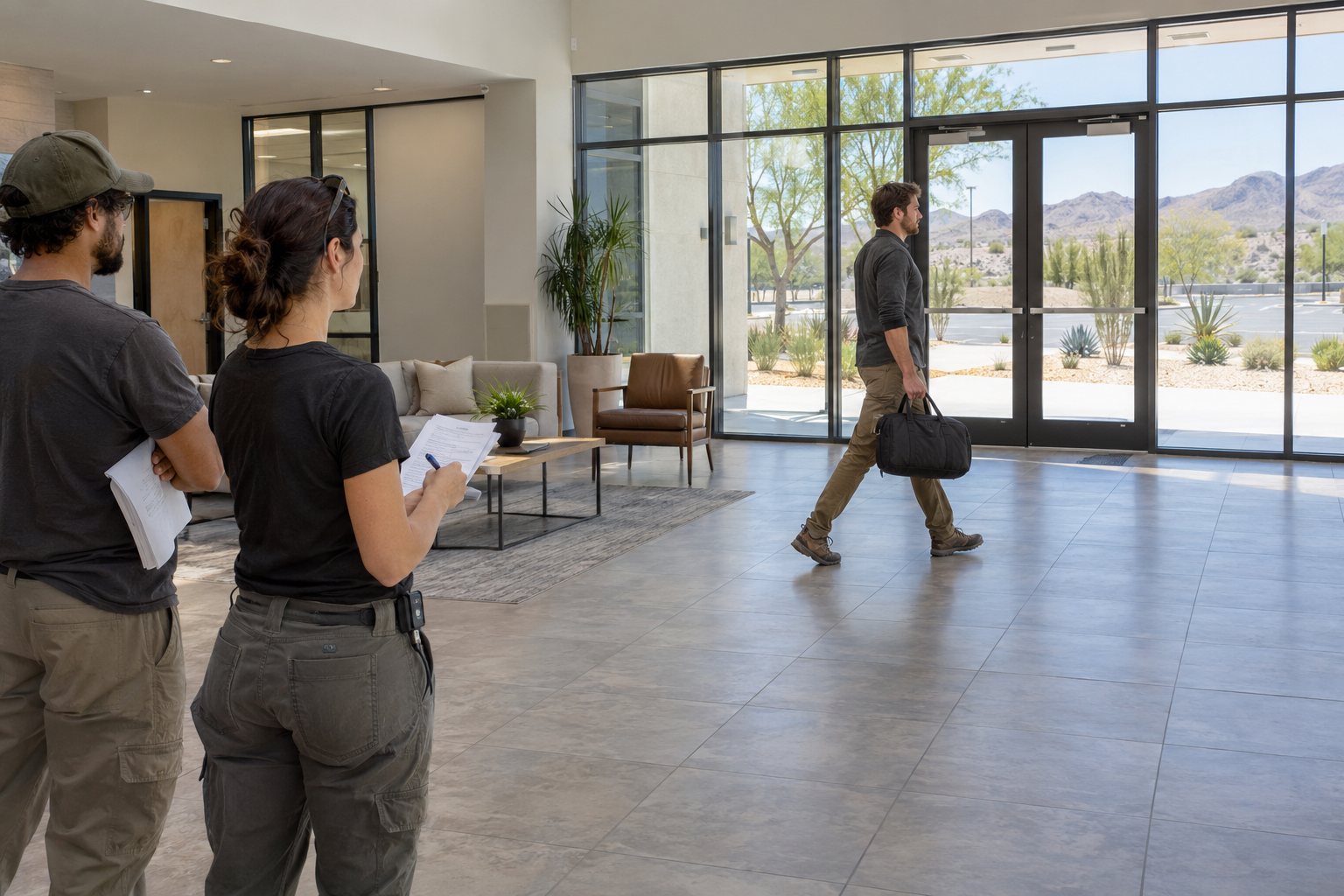
Consider a hypothetical travel-bag commercial in a contemporary office lobby in the Las Vegas area. A performer enters, sets down the bag and meets a colleague. The action is brief, and the intended image feels simple. This is a fictional example, not an account of an In Color Studios client shoot.
Making that action repeatable involves several positions the audience never sees. The performer needs a starting place. The bag needs to be prepared and returned. The colleague needs a place to wait. A person checking the product presentation needs a useful view without becoming part of the background.
These activities are connected to the shot. If preparation happens on the same route as the entrance, every reset may interrupt the composition. If the bag waits far from the action, a small adjustment becomes a longer exchange. The issue is the relationship between the work and the image, rather than the size of the crew alone.
A more generous lobby does not automatically solve it. Space becomes useful when its purpose is understood. A modest side room can contribute more than an impressive expanse that the production cannot actually use.
The boundary of the location matters
In the Las Vegas area, a place name is not a sufficiently precise production address. Clark County's film FAQ emphasizes identifying the specific location and directs productions to a jurisdiction locator. Its guidance makes clear that the region people call Las Vegas includes several jurisdictions.
That specificity also matters at the scale of a single property. The room appearing in the shot, the preparation area and the route connecting them may have different practical limits. A plan that discusses only the photographed room leaves the rest of the production footprint unresolved.
For the fictional lobby scene, the useful conversation concerns the proposed activity: where people arrive, what areas are included, when preparation happens and how ordinary use of the building relates to filming. A booking or appealing scout image does not answer all of those questions.
The exact address and activity belong with the property representative and the relevant local permitting authority. This article does not determine permission for a particular site. Its editorial point is that the boundary of the working location deserves as much attention as the boundary of the camera frame.
Preparation can protect the location's character
The reason for choosing a real setting is often a particular quality: the relationship between rooms, the proportions of an entrance, or a sense of everyday use. Production preparation is most valuable when it allows that quality to remain legible.
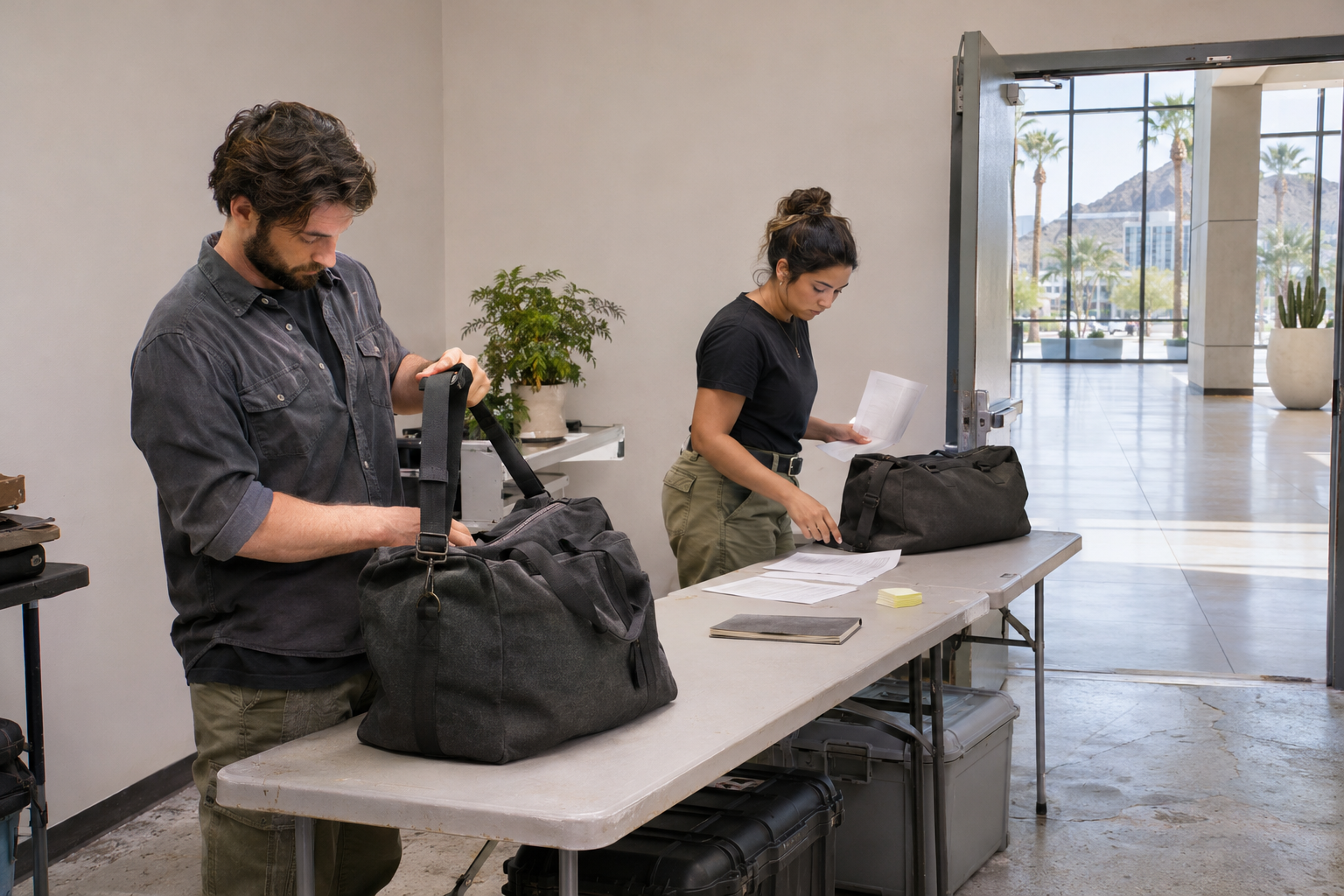
In the bag commercial, a separate preparation area could keep alternate product samples and working notes out of the lobby. The performer could rehearse the entrance while the next adjustment is handled elsewhere. The location would still feel like an office because the support work has a place of its own.
This connects to the stages of commercial production. Decisions made during preparation become conditions for what can be captured. Discovering a constraint early gives the director and producer room to alter the approach. Discovering it after the action is set can make an ordinary adjustment more disruptive.
Our broader location-versus-studio article considers the choice between environments. The question here comes after that choice: how can the selected place support the work without losing the character that made it interesting?
The room has a life after the shot
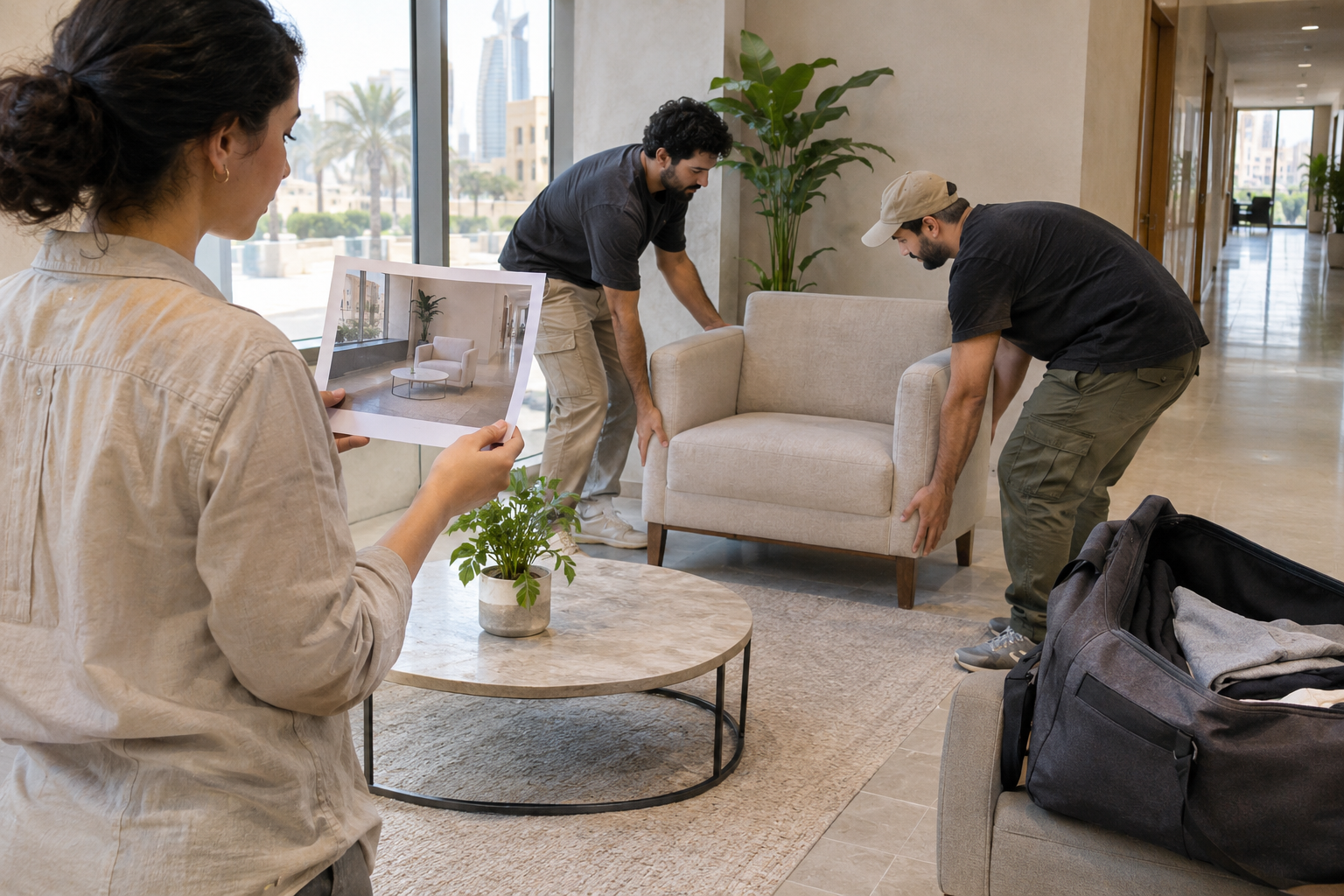
A real location eventually returns to another use. In the fictional lobby, furniture, product material and the working area have to be accounted for when filming ends. That return is part of understanding the place, even though it contributes no extra seconds to the finished commercial.
It also changes how a location can be valued creatively. A room that supports a clear preparation area, an intelligible route and a manageable reset may give the team more useful options than a more striking photograph with unresolved conditions around it. That is a production judgment, not a universal claim about cost or speed.
For brands discussing video production services in Las Vegas, the strongest location conversation can hold both pictures at once: the image the audience will see and the working space that makes it possible. What the camera leaves out is still part of the commercial.
Images are AI-generated illustrations of fictional production scenarios.