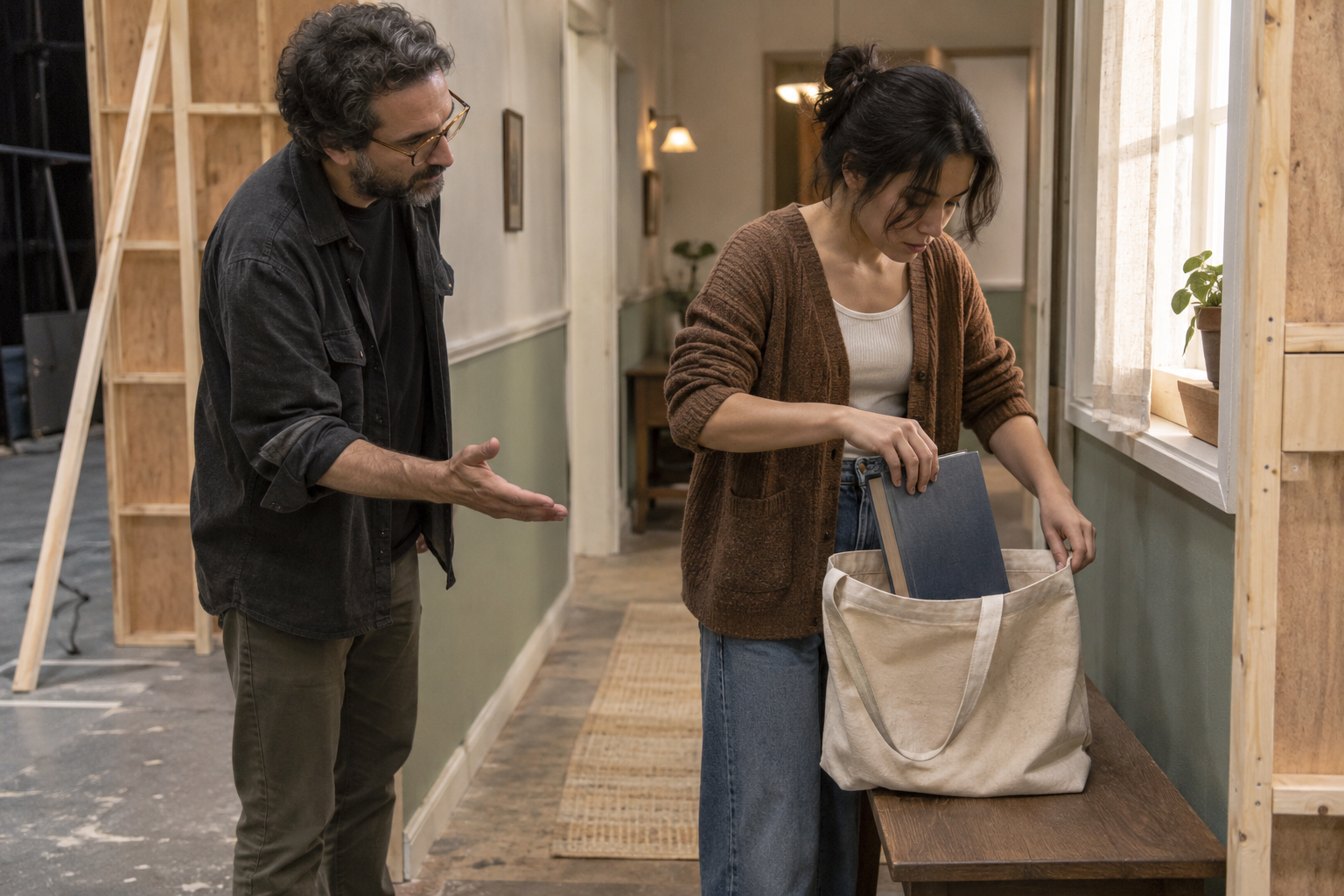
A hand reaches for a bag in one shot and completes the movement in another. The view changes, but the gesture seems to continue. In a commercial, that small connection can move the audience from a person’s routine to a product detail without making the sequence feel as though it has stopped to explain itself.
Cutting on action gives the edit that possibility. Its creative value begins before the timeline, in the movement the performer repeats and the information each view preserves. An editor can choose a persuasive join only from the material the production has made available.
The technique also raises a useful question for product work: what becomes easier to follow, and what disappears inside the cut? A seamless transition can support a message. It can also carry the viewer past the very detail the commercial needs to communicate.
A continuing gesture can connect changing views
Adobe’s continuity-editing overview places continuity within the larger task of keeping viewers oriented across shots. The image can change its scale or position while the sequence maintains an intelligible sense of the event. Consistent props matter, but continuity is also about the relationship between moments.
EditMentor’s cutting-on-action lesson, by Misha Tenenbaum, describes joining shots during the movement of a character or object. The action gives the viewer a connection to follow as the image changes. That is a technique for shaping the transition, not a guarantee that every cut during motion will be convincing.
Consider a fictional canvas-tote commercial. A performer is leaving home and places a plain book into the bag. A wider shot establishes the person, bench and departure. A closer shot gives the hand, opening and fabric more attention. Cutting during the placement could connect those two views through one understandable action.
This is an illustrative production example, not an account of an In Color Studios campaign. It makes no claim about a real bag’s capacity or durability. The creative question is what the audience needs to see to understand this particular gesture.
The useful action extends beyond the intended cut
In the fictional scene, the close shot could begin with the hand already inside the tote. That might supply a tactile image, but it leaves the editor fewer ways to connect it to the wider view. The entry of the book, the hand’s path and the moment of release may each offer a different transition.
A complete repeated action gives the edit room to consider those alternatives. The production can capture the approach, placement and withdrawal in the relevant views, even when the final spot will show only a small part of each. The intended cut is a creative proposal. The captured material should make that proposal possible without depending on one fragile instant.
That distinction connects with our broader discussion of product-shot functions. A closer angle earns its place when it contributes information. In the tote example, it might make the opening or the fabric’s response more legible. Simply moving closer does not establish what the viewer has gained.
The relationship between views therefore belongs in the shoot conversation. A wide shot and a detail can both be attractive while describing different versions of the action. Coverage becomes useful when the two can communicate together.
Repetition preserves the action’s character
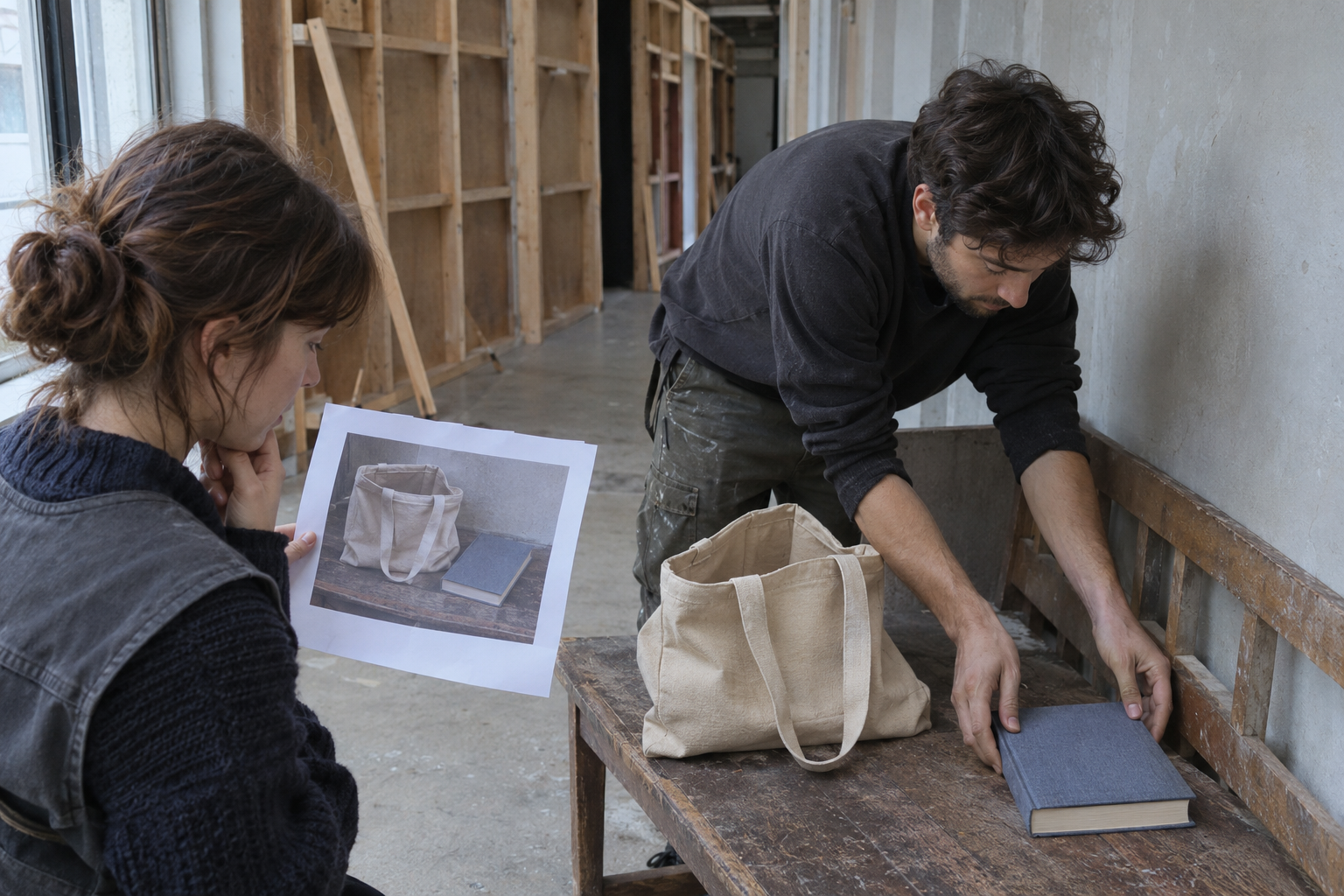
The book’s orientation, the hand holding it and the bag’s position help define the gesture. If those relationships change substantially between views, the intended continuation may feel less clear. A small change can matter when it occupies the viewer’s attention.
For the fictional commercial, one take might show the performer easing the book into the opening while another has it dropped quickly from above. These are different performances, even if the same book reaches the same bag. Matching only the final position would overlook their different energy.
The commercial director can develop the action with the performer and relevant departments, then assess what should remain consistent across coverage. A reference of the starting arrangement can help a reset, while rehearsal reveals how the movement actually unfolds. Neither requires the performance to become mechanically identical in every respect.
There is a creative balance here. Too little agreement can leave the shots difficult to connect. Excessive attention to tiny marks can make the action feel performed for continuity rather than lived by the character. The useful aim is repeatable intention and sufficiently coherent movement, with room for a convincing performance.
Smoothness is one editorial choice
Even with compatible material, the transition needs judgment. A cut can emphasize the instant the book enters the opening, the movement of the fabric or the performer’s decision to leave. Each possibility places attention somewhere different.
For an explanation-led tote spot, the sequence may need to hold long enough for the viewer to recognize what is being placed and where it goes. If the cut removes that relationship, a smooth gesture could conceal the product’s role. A transition can feel elegant and still leave the message vague.
Another version might favor compression. Once the action is understood, the edit could move briskly toward the departure. A quiet pause before the hand releases the book might instead give the moment a more deliberate quality. There is no single frame count that establishes the right rhythm across different performances and briefs.
The technique also need not make every transition invisible. A deliberate break can announce a change of time, mood or idea. The useful comparison is between the effects those choices create in this commercial, rather than treating smoothness as a universal measure of quality.
The edit tests the relationship the shoot prepared
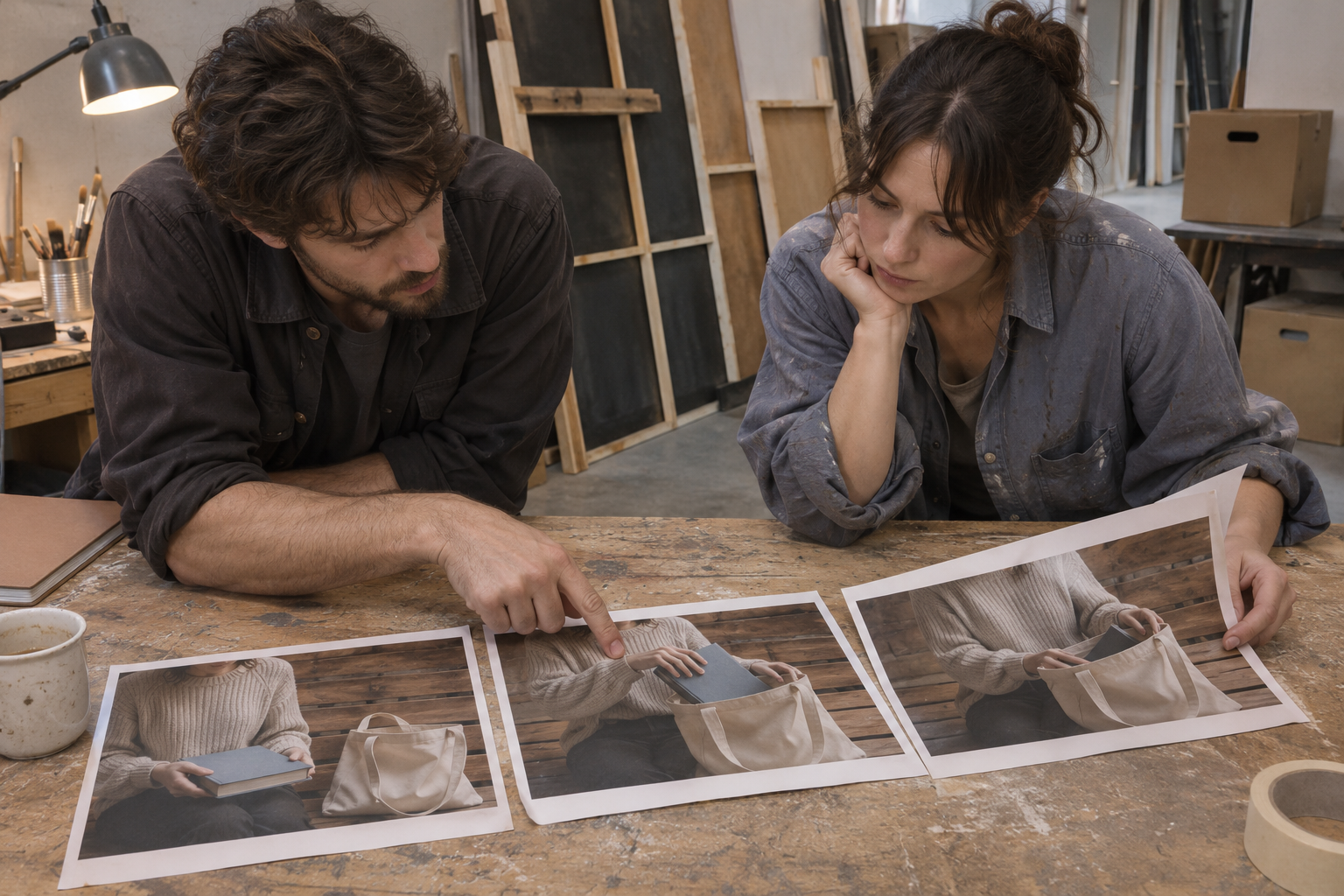
Looking at two isolated frames can confirm the book and bag positions. Watching the joined movement asks a different question: does this feel like the intended action, and does the viewer receive the important information? The sequence has to be judged in time.
In the fictional spot, the most convincing continuation might come from a slightly different take than the most attractive individual close-up. That is the value of capturing useful options. The editor can consider performance, readability and rhythm together instead of protecting a single image at the expense of the sequence.
For brands discussing video production services, cutting on action offers a concrete example of why production and post belong in the same creative conversation. The shoot prepares a set of relationships. The edit discovers which of them communicates best. A cut that appears effortless can carry the work of both.
Images are AI-generated illustrations of fictional production scenarios.