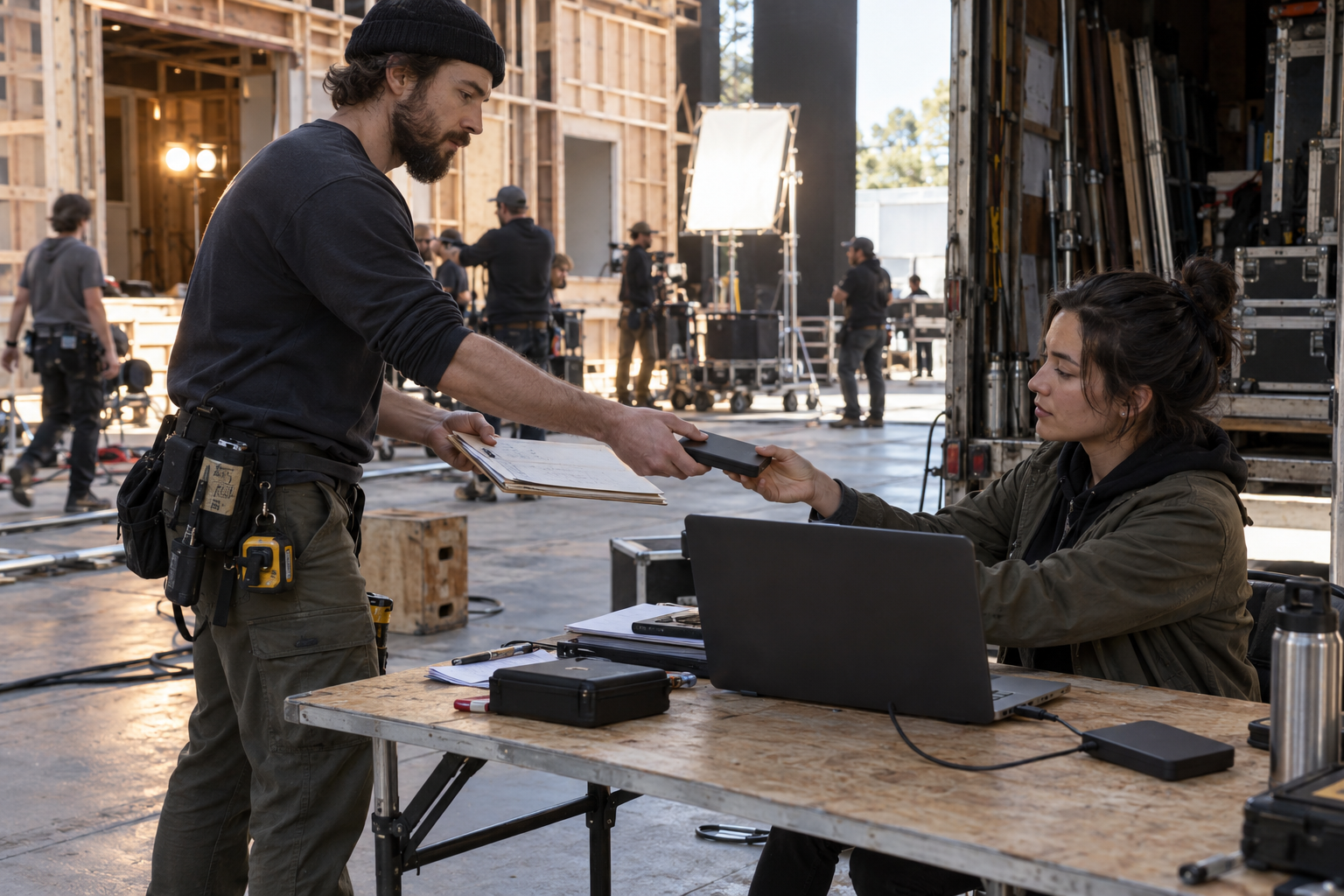
Adobe and NVIDIA’s expanded partnership brings a familiar production concern into the AI conversation: how quickly recorded material becomes useful to the next person. Their October 15 announcement includes accelerated creative applications and cloud media processing in Frame.io, with the stated aim of making uploaded content searchable sooner. For commercial teams, that places attention on the handoff as well as the edit.
The October 15 announcement describes work across Photoshop, Premiere and Substance 3D, alongside Frame.io. Adobe attributes the cloud improvements to GPU-based decoding, preprocessing and the generation of representations used for search. Those are processing improvements, not evidence that a whole campaign can be completed in the same proportion of time.
The distinction matters because commercial production contains several kinds of waiting. Some are technical: material is uploading, processing or rendering. Others depend on a person recognizing the right moment, resolving a note or approving a version. Acceleration can change the relationship between those activities without making them interchangeable.
The material has to become available before it can become a choice
Media search sits early in that relationship. An editor cannot build a useful comparison from material that is still unavailable to the working team. Reducing the delay between an upload and searchable content could make a growing library more accessible while creative decisions are still in motion. That is the practical attraction of the announcement's cloud emphasis.
The collaboration builds on the companies’ March partnership. The October development is an expansion, not the first connection between these companies. It also spans different local and cloud workloads. A faster operation inside an application and faster processing of an uploaded library can help different people at different points in a job.
For a commercial with multiple versions, retrieval has a creative consequence. Material that is easy to find can enter the conversation. A useful alternative buried among several similar takes may never get considered under time pressure. Search can improve the chance of reaching that alternative, but the team still needs to understand why it was recorded and whether it answers the current edit's problem.
That is a more useful production question than a general promise of speed. The value lies in what becomes possible with the recovered time: another comparison, a clearer performance choice, or an opportunity to resolve a difficult transition before the review window closes. These are editorial possibilities, not measured outcomes from this announcement.
Finding a similar shot is different from finding the right version
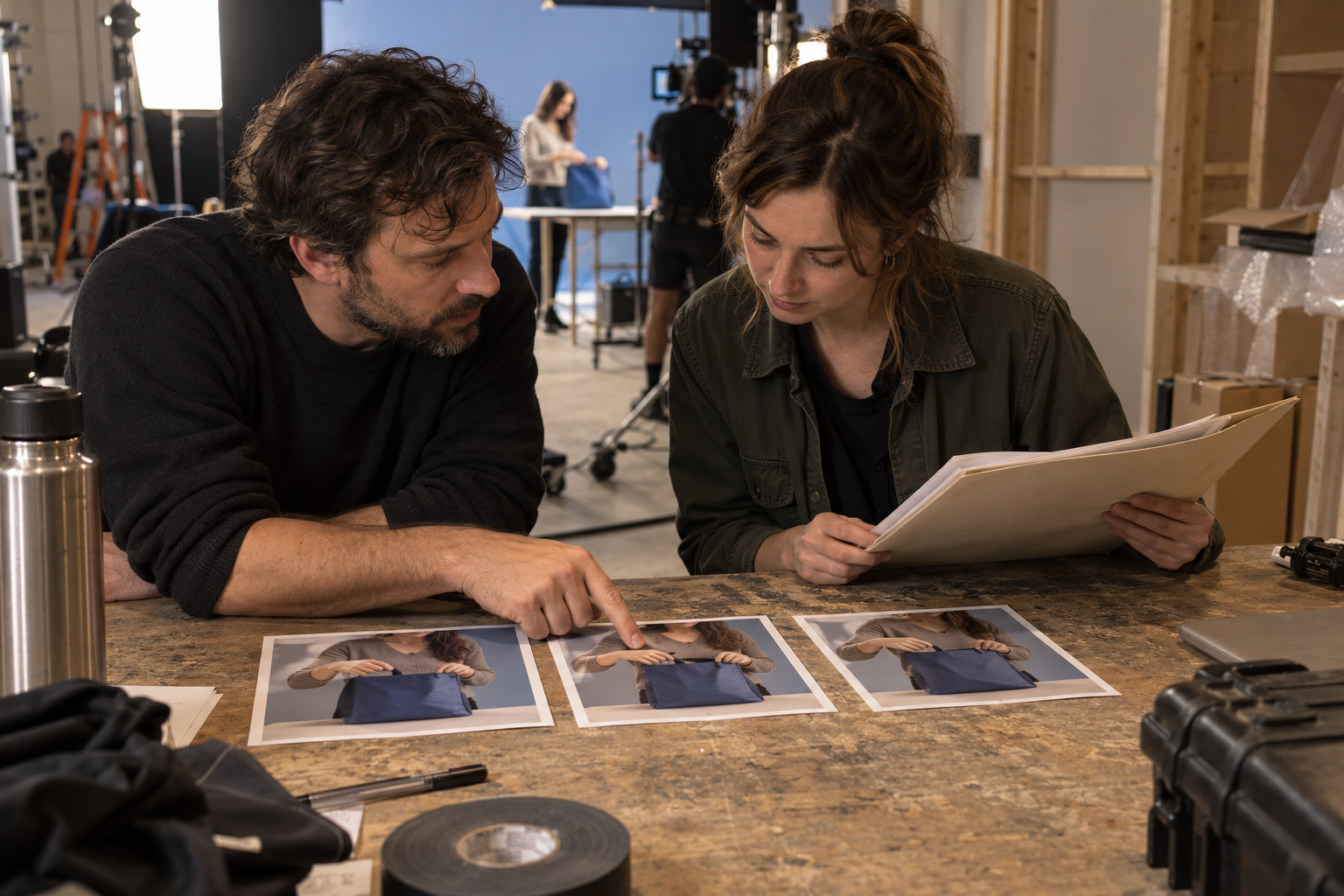
Imagine a fictional commercial for a fabric bag. Several takes show a performer opening it. The action looks similar, but one take gives the opening enough time to read, another has the preferred performance, and a third shows an earlier product sample. An image-based search result might bring the team to the right kind of action. It cannot, by that fact alone, establish which take belongs in the approved campaign.
This is where production context continues to carry weight. A note about the approved sample, a clear version identity and the reason a take was preferred can turn a promising result into a dependable choice. Without that context, faster retrieval could simply move uncertainty to the review stage.
The same distinction applies after editing begins. A reviewer may recognize a compelling image while looking at a version that has since been replaced. An editor may retrieve exactly the requested action but need to know whether the associated product presentation remains current. The interesting question is how technical discovery and production knowledge meet, rather than which one can stand in for the other.
Our guide to the stages of commercial production follows those changing responsibilities from preparation through delivery. This announcement adds a technology development inside that larger chain. It does not redraw every approval boundary around it.
Performance claims need a production-sized frame
Adobe reports early results from selected Frame.io transcode and search workloads. Those are vendor-reported measurements for particular operations. They are not an independent test of a studio's media, connection, staffing or delivery schedule. This article makes no hands-on performance claim for the announced optimizations.
A production team can be interested in the direction of the work without treating a processing result as a forecast for the entire job. A library might become ready earlier while a creative review still happens at its scheduled time. A more responsive task might let an artist explore more variations rather than leave earlier. Both can be valuable, but they describe different uses of capacity.
The commercial production brief remains relevant here. If the required outputs and decision owners are unclear, faster access to material will not resolve that uncertainty. If they are clear, an earlier search result can reach someone who knows what to do with it. Workflow acceleration gains meaning from the assignment it is serving.
A useful speed gain leaves room for judgment
The strongest reading of Adobe and NVIDIA's announcement is that some of the less visible work around creative production is receiving attention. Processing and discovery help determine when material can participate in a decision. They can influence the rhythm of a job even when they do not appear in the finished commercial.
For brands and agencies, that offers a useful way to discuss new technology with a production partner. The conversation can connect a faster operation to a real creative need: comparing performances, finding an alternate angle or making a review more informed. The claim becomes specific enough to assess without assuming that every saved second produces the same business result.
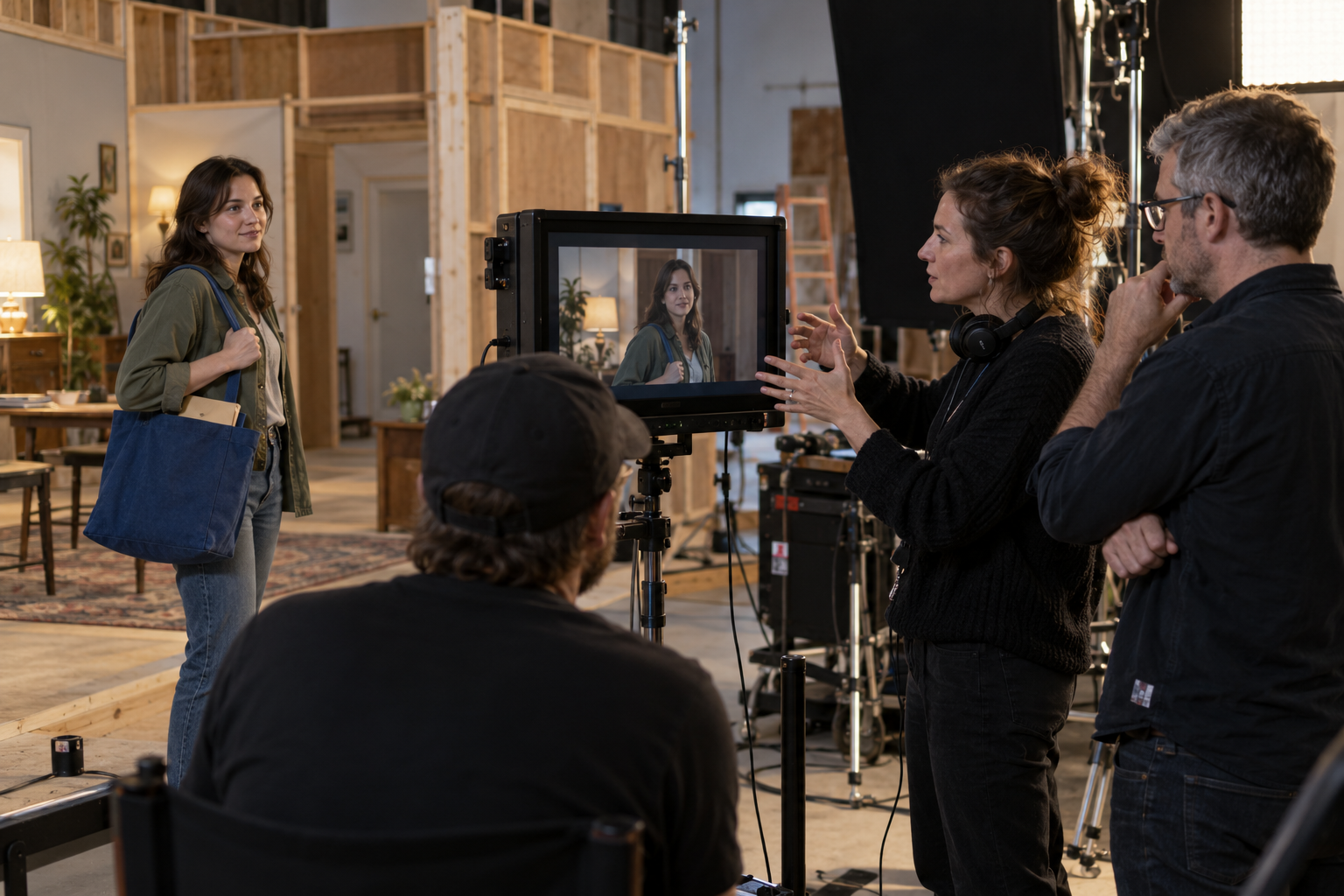
In video production services, speed is most useful when it improves the next decision. A searchable library is an opportunity to work with the material more intelligently. The creative value arrives when the right people can recognize, develop and approve what they find.
Images are AI-generated illustrations of fictional production scenarios.