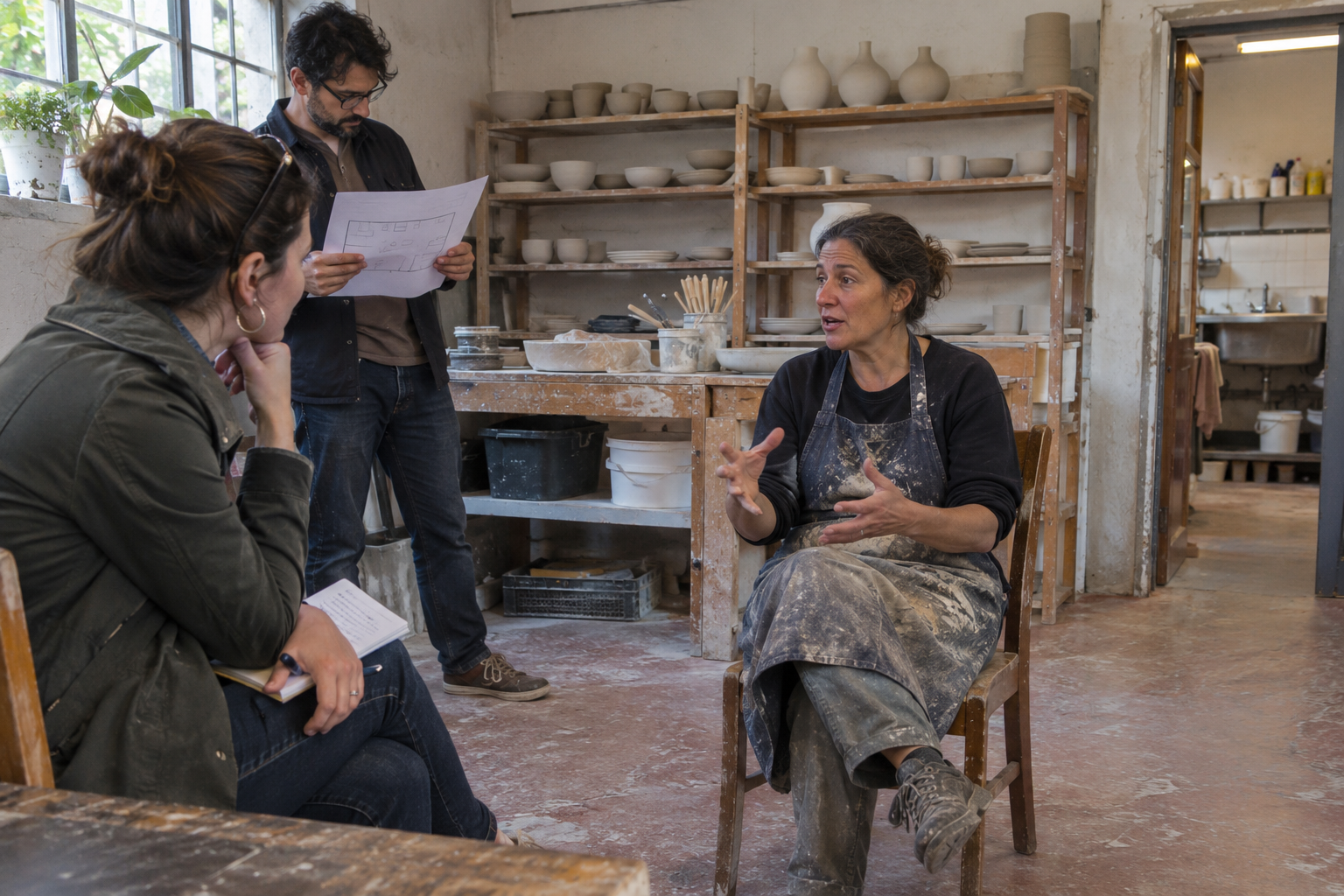
A showroom can tell a brand’s story before anyone speaks. The surfaces, objects and activity give the interview a setting. Then a conversation begins, and the room reveals another character: visitors interrupt, a neighboring task competes with the answer, or the most attractive seat sits in light that will not stay there.
For a one-day brand interview, location choice is a negotiation between the picture and the conversation. The strongest background is useful only if the production can capture the person’s account within it.
These five priorities are ranked by their effect on intelligible, uninterrupted answers first, then visual consistency and specificity. This is our editorial order for a seated interview with one speaker and a small crew, not a measured ranking for every production. Permission, safe access and the speaker’s agreement are prerequisites. A room that fails those requirements is outside the comparison.
1. A sound environment that supports the voice
For an interview-led film, the voice carries information the background cannot replace. That makes the room’s sound the first creative consideration in this ranking. A beautiful image offers little compensation if the important answer is difficult to understand.
KU’s interview-audio advice, written by Andrew Lee, recommends listening to a location before the shoot and considering whether its noise can be controlled. It also describes recording room tone to help join interview audio in the edit. That is useful preparation, rather than a promise that every unwanted sound can be removed later.
Imagine a fictional ceramic maker choosing between her public showroom and a quieter workroom for a brand film. The showroom’s activity might express the business well. If conversations repeatedly compete with her account, however, the workroom may offer a more useful starting point. This is an illustrative scenario, not an account of an In Color Studios client shoot.
Sound belongs first because the audience needs her meaning. A different brief could welcome environmental activity, but that should be an intentional relationship between voice and place.
2. Enough control to let an answer develop
A quiet room and an available room are different things. The showroom might be silent during a short scout yet remain a route for staff throughout the interview. The problem then becomes interruption rather than acoustics alone.
For this one-day scenario, the second priority is a realistic window of uninterrupted use. A speaker may need time to find the words, follow an unexpected thought or return to an earlier answer. A room that can hold that conversation gives the interviewer more freedom than one that must constantly return to another purpose.
The ceramic maker’s workroom could be less impressive in a photograph but easier to reserve for a complete session. That tradeoff earns second place because continuity of attention matters to the material being created. It does not establish that a private room always produces a better performance.
This is also where the location conversation becomes specific: who uses the room, what activity continues nearby and what the agreed filming period actually includes. Availability should describe the proposed use, not just an empty square on a calendar.
3. Light that can support the intended session
An appealing patch of daylight can make a room feel immediately right. Its usefulness also depends on the interview’s timing and visual approach. A look chosen for a brief moment has to be considered against the session the production intends to film.
ASU’s interview-location guidance brings light, sound, acoustics and working room into the location decision. Its advice supports evaluating the environment as a whole. Our ranking separates those concerns so their competing effects can be discussed.
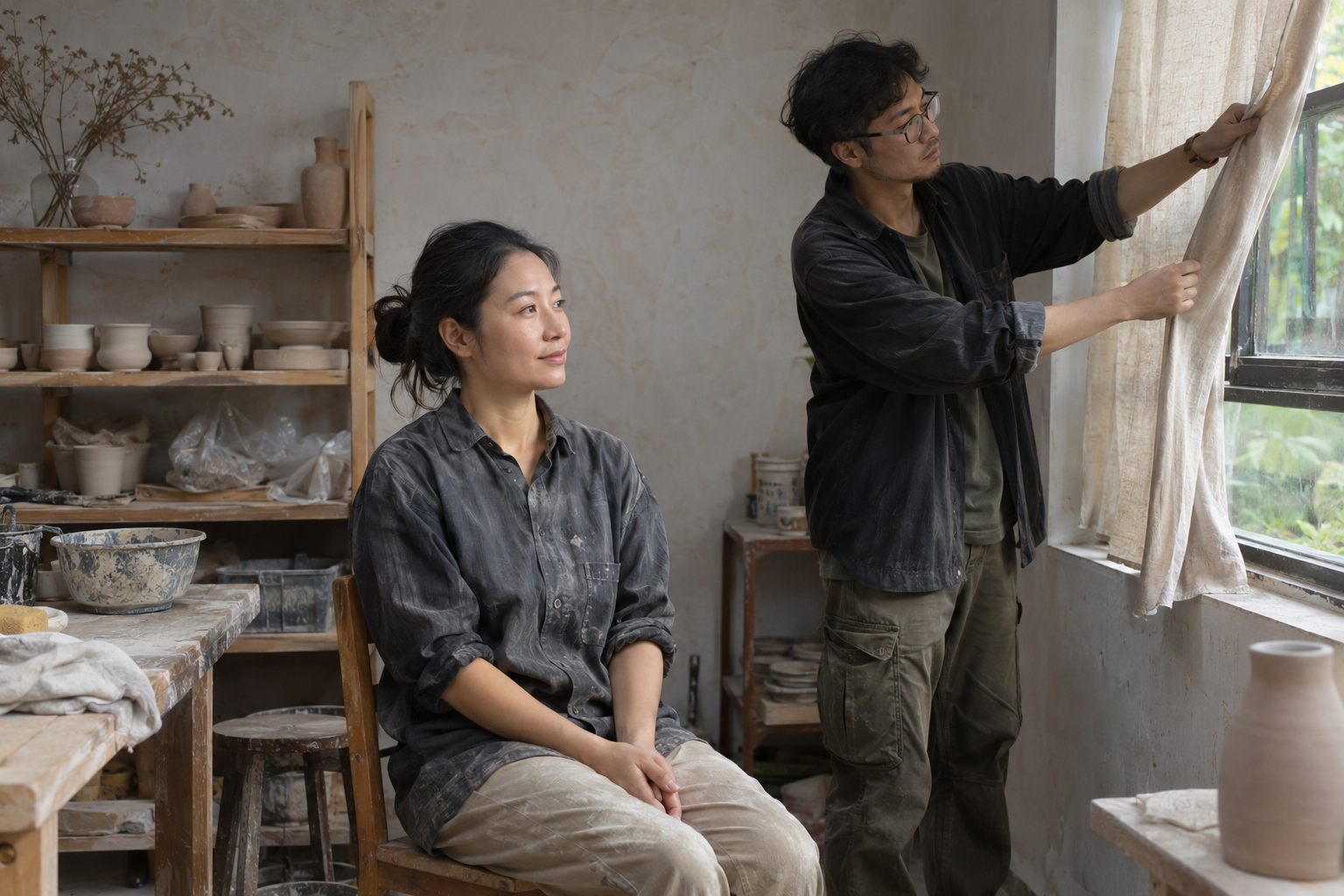
In the fictional workshop, a side window might give the maker’s face a natural relationship with the space. The question is whether the crew can maintain the intended treatment as the session develops. Our guide to lighting for commercial production explains the underlying controls in more depth.
Light ranks below the conversation’s audibility and continuity here because a different visual treatment may still serve the story. That is a creative judgment about this interview, not an instruction to accept uncontrolled exposure or postpone lighting decisions until the shoot.
4. Working distance that preserves options
A room can accommodate the chair yet offer little flexibility around it. The interviewer, camera position and lighting approach all need a relationship to the speaker. Distance behind the chair also changes the range of possible compositions.
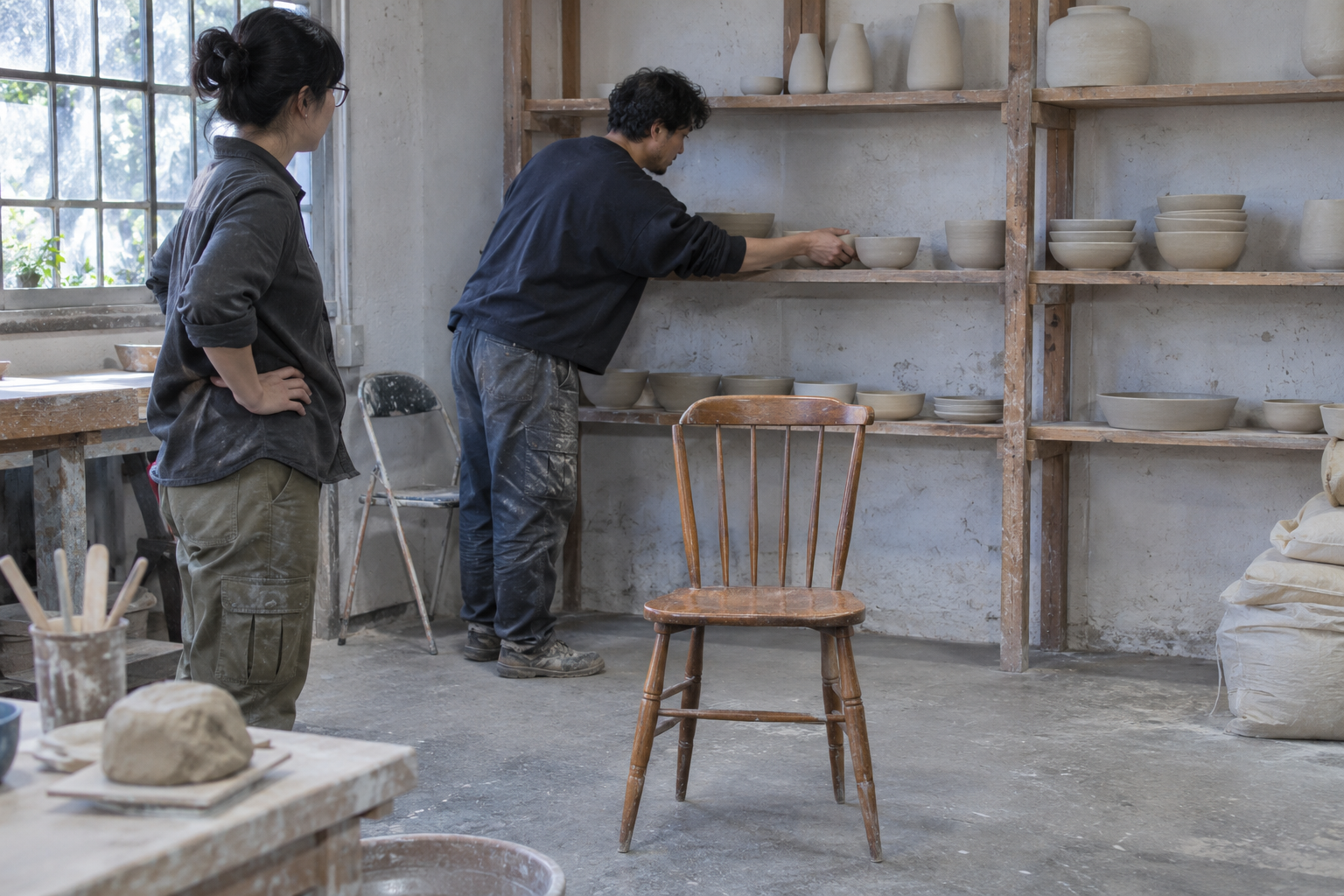
For the ceramic-maker film, the workroom might allow a modest separation between the speaker and shelves. A smaller display corner could force every element into a single arrangement. The distinction is useful working distance, rather than impressive room size on its own.
This priority sits fourth because extra space becomes valuable after the location can sustain the actual conversation and intended light. A larger room with unresolved interruptions is not automatically an upgrade. A modest room that supports the agreed approach may be enough.
Our location editorial on production space outside the frame considers the surrounding preparation and movement more broadly. For this interview, the narrower question is how much freedom remains once the speaker’s position has been chosen.
5. Background character that earns its attention
Fifth does not mean disposable. The background can make the conversation specific: unfinished bowls, a worn bench or the relationship between work areas may suggest something meaningful about the maker’s world. The strongest choice adds context without competing with the person.
It ranks last here because visual character is easier to overvalue at the first photograph. The fictional showroom could be the right location if its other conditions are workable. The quieter workroom could instead reveal a more intimate part of the business, with a restrained adjustment to the objects behind the chair.
A film about the public experience of the showroom might put that setting much higher. The ranking should change when the story’s purpose changes. It should not change merely because the first candidate photographs well.
For brands planning corporate video production, the useful comparison holds both ambitions together: a place that communicates and conditions that let a person communicate within it. The room’s best feature may be the freedom it gives the conversation.
Images are AI-generated illustrations of fictional production scenarios.